
How Outdoor Brands Source Products From China
A step-by-step guide to sourcing outdoor products from China, from specification and supplier qualification to sampling, inspection and shipment.
Published July 20, 2026
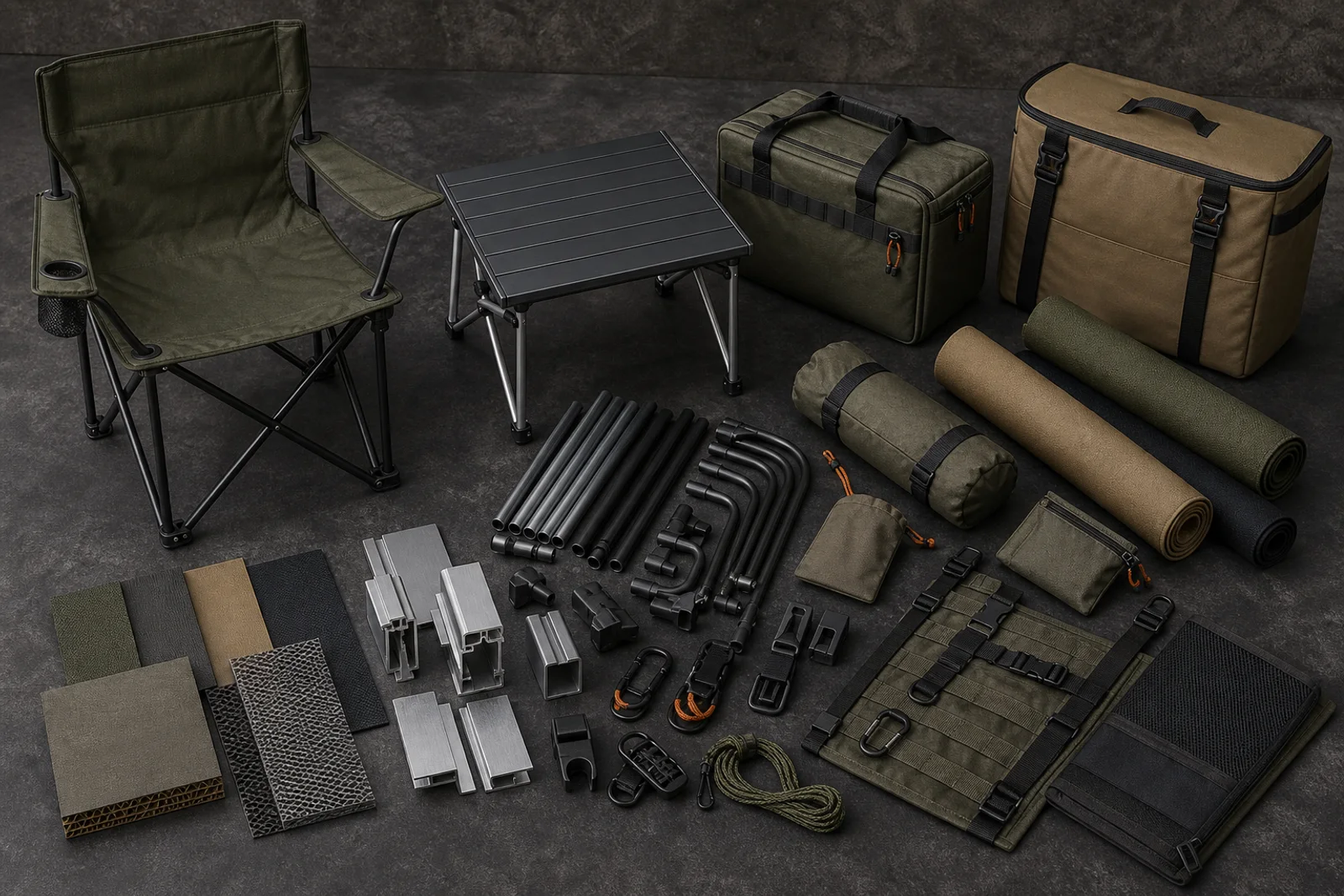
China remains an important outdoor product manufacturing base because its supply network can combine textiles, metals, molded parts, packaging and export services. That breadth is useful—but it does not replace a disciplined sourcing process.
Define the product before searching
Supplier searches are more effective when the first brief contains enough information to test capability.
Include:
- Intended use and user
- Destination market
- Drawings, references or key dimensions
- Expected materials and construction
- Estimated first order and annual volume
- Branding and packaging requirements
- Target launch window
- Required standards or buyer test protocols
You do not need a finished engineering package to start. You do need to identify which requirements are fixed and which are open to manufacturer recommendations.
Build a capability-based shortlist
Search terms such as “camping gear manufacturer” produce broad results. Narrow the list by the processes your product actually needs.
For example, a folding table may require tube fabrication, surface finishing, hardware sourcing, assembly and pack-volume engineering. A technical bag requires different machinery, material knowledge and workmanship controls.
Ask candidates to explain relevant processes and show evidence that matches the category. Avoid treating a long catalog as proof of direct manufacturing capability.
Qualify before sampling
Before paying for samples, review business identity, export experience, product-process fit, typical quantities, quality workflow and communication.
The level of qualification should match the risk. A simple accessory reorder and a newly tooled load-bearing product should not use the same diligence.
For higher-risk programs, consider a video review, independent company verification or on-site factory audit.
Use sampling as a controlled experiment
Sampling should answer defined questions. Confirm what the sample will use for materials, tooling, color and branding, and what will differ in production.
Keep feedback in one consolidated document. Photograph issues, reference dimensions and assign revision numbers. When the sample is approved, connect it to the current specification.
Confirm the complete commercial package
Before issuing the purchase order, align:
- Final product specification
- Unit price and quantity breaks
- Tooling and sample ownership
- Payment terms
- Production lead time
- Packaging and carton marks
- Inspection standard
- Shipping term and required documents
MOQ and lead time should be linked to material commitments and the approval date, not treated as isolated promises.
Inspect against the approved reference
An inspection is only as useful as its criteria. Define critical, major and minor defects where appropriate and include functional checks that reflect the product.
Third-party inspection is valuable when the buyer cannot be present, but the inspector still needs the right specification, approved sample information and sampling plan.
Improve the system after each order
After shipment, record product, packing, document and communication issues. Feed those lessons into the next specification and inspection plan.
Strong China sourcing is not built on finding a “perfect factory.” It is built on a repeatable process that makes requirements visible and changes controllable.