
01
Technical drawing
Best for dimensioned, engineering-led products.
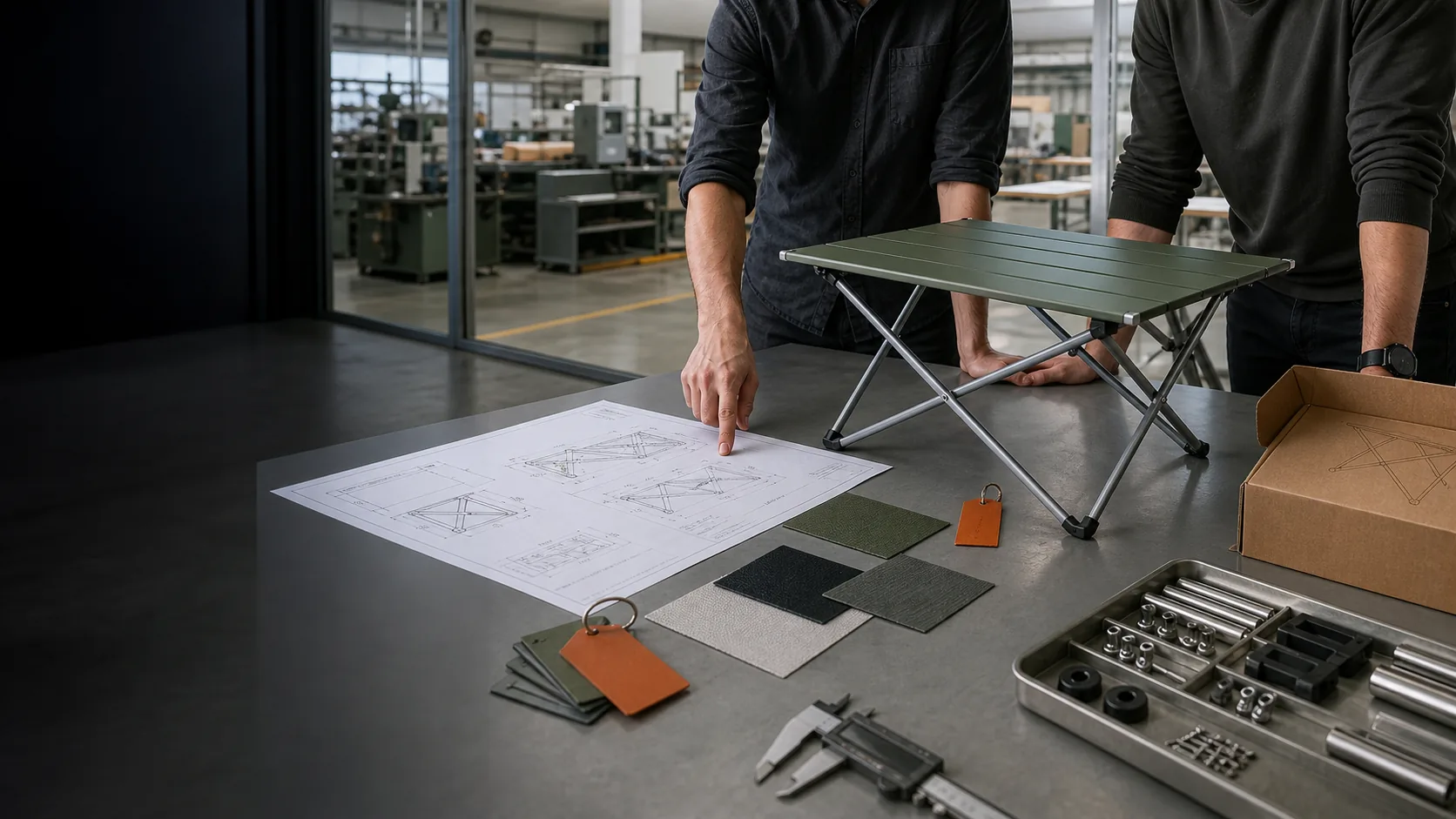
OEM / ODM manufacturing
Custom outdoor equipment development with clear technical reviews, approval gates and quality criteria.
Where projects begin
We structure the next step around your current input. Early concepts need feasibility; mature specifications need manufacturing review.
01
Best for dimensioned, engineering-led products.
02
Useful for benchmarking construction, function or finish.
03
Define use, target market, cost, quantity and timeline.
04
Adapt an approved product language to adjacent items.
Development gates
A gate closes only when the information needed for the next stage is agreed.
01
We review drawings, target use, compliance needs and commercial goals.
02
Material, finish and construction options are matched to performance and cost.
03
Samples confirm dimensions, handling, appearance and packaging direction.
04
A controlled pre-production run locks the process and inspection criteria.
05
Documented checkpoints keep production aligned with the approved sample.
06
Final inspection, packaging checks and shipment handoff close the loop.
Approval package
FAQ
OEM typically follows your specification or design. ODM starts from an existing development platform that is adapted to your requirements. The final project route depends on product complexity and ownership expectations.
Yes. A mutual NDA can be reviewed before sensitive drawings, target costs or product roadmaps are exchanged.
The number depends on complexity and approval criteria. The sampling plan identifies expected review rounds and what each sample is intended to validate.
Design files, tooling ownership, confidential information and permitted use should be documented in the project agreement. We encourage buyers to define these points early.
Yes. Buyer-appointed third-party inspections can be scheduled against agreed specifications and inspection criteria.
Start a project
Send a drawing, reference image or concise requirement list. We will identify the questions that need answers before sampling.