
Prototype and Sampling Guide for Custom Camping Products
A buyer's guide to outdoor product prototypes, sample stages, approval records and the steps that turn feedback into a production-ready specification.
发布于 2026年7月26日
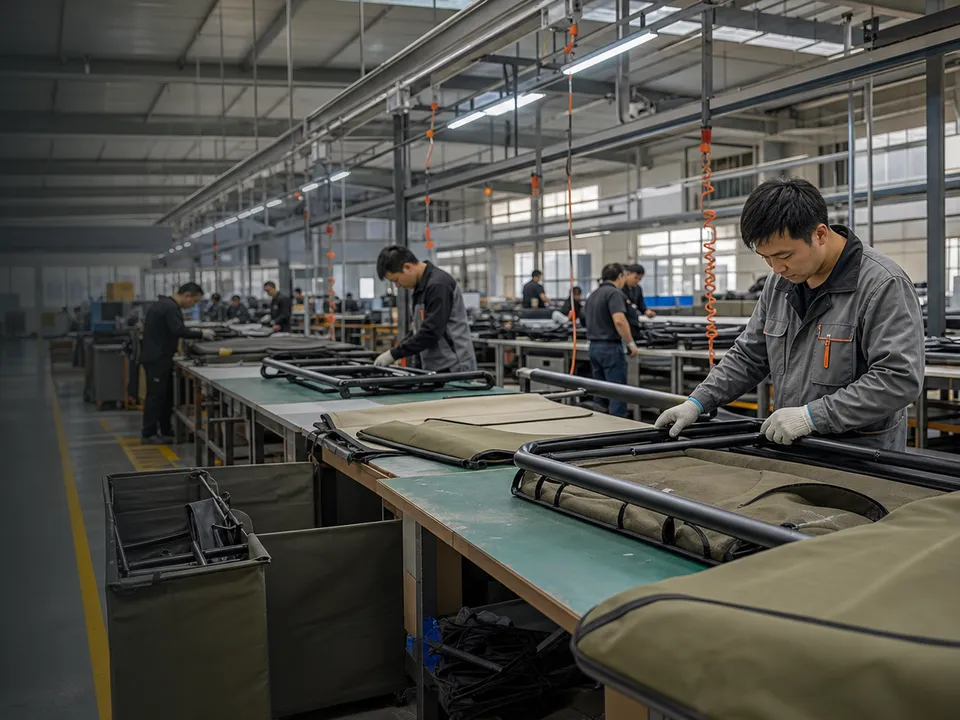
Sampling is where a product idea becomes a manufacturing reference. It is also where outdoor brands can remove risk at relatively low cost.
The mistake is treating every sample as a finished sales sample. Early samples should answer specific questions. When each round has a defined purpose, feedback becomes clearer, development moves faster and the approved result is easier to reproduce.
Start with a usable product brief
A factory cannot accurately sample an undefined idea. Your brief does not need to be a full engineering package, but it should state:
- Intended user and use environment
- Target dimensions, weight or packed size
- Performance priorities
- Preferred materials and acceptable alternatives
- Branding locations and methods
- Color references
- Packaging concept
- Destination markets
- Target order quantity and price position
- Reference photos or competitor products, with the features you do and do not want
Separate requirements from preferences. “Must support the specified working load” is different from “prefer a lighter carry bag.” This helps the supplier make responsible trade-offs.
Use different sample stages for different decisions
Concept or appearance sample
This stage confirms overall form, size, layout and brand direction. Substitute colors or materials may be acceptable if they do not affect the decision.
Functional prototype
The functional prototype is built to test construction, assembly, handling and key performance risks. It may not look retail-ready. Record any temporary components so they are not mistaken for approved production choices.
Revised development sample
This round combines closed feedback and moves closer to final materials. It is useful when the first prototype reveals changes that affect several components.
Pre-production sample
The pre-production sample should represent what the factory intends to make in bulk. Final fabric, hardware, logo execution, labels and packaging should be used unless a documented exception remains.
Not every project needs four physical rounds. A simple color-and-logo program may require fewer. A new mechanism may require more.
Create a sample specification, not just a comment list
Feedback such as “make it stronger” is difficult to manufacture. Convert comments into measurable changes where possible:
- Increase webbing width from the old value to the approved value
- Move the logo a defined distance from the seam
- Change the packed dimensions to the agreed maximum
- Replace a component with a named material or part reference
- Adjust a tolerance shown on the drawing
Use annotated photos and numbered comments. The factory should respond to every item with a status: accepted, alternative proposed, clarification needed or not feasible.
Control materials and color
Outdoor performance can change when a material changes. Fabric weight, yarn, weave, coating, lamination, finish and color can all matter. Metal alloy, wall thickness and surface treatment can affect both cost and function.
Approve materials using a clear reference such as a supplier code, specification or sealed swatch. For color-critical products, define the lighting or color standard used for review.
If the production material cannot be used in an early prototype, require the exception to be written on the sample record.
Read our materials guide for custom outdoor equipment before choosing only from a photo or a generic material name.
Test the risks the sample was built to answer
A sample review should include normal use and foreseeable misuse relevant to the product. Possible checks include:
- Setup and pack-down
- Fit between components
- Sharp edges or pinch points
- Stability
- Static or repeated loading
- Seam and attachment integrity
- Water exposure
- Packed size and carry comfort
- Label legibility
- Packaging protection
Do not treat one successful sample as proof of mass-production consistency. Development testing validates the design direction; production quality controls validate output.
Manage sample cost and ownership
Before work starts, confirm:
- Sample price and revision charges
- Tooling or setup charges
- Courier cost
- Expected completion date
- Number of included revisions
- Ownership and storage of tooling
- Whether sample charges are refundable against an order
- Confidentiality expectations
Custom work has real material and labor cost. A transparent charge structure is usually more useful than a “free sample” whose scope is undefined.
Approve with conditions clearly recorded
An approval can be:
- Approved for the next stage
- Approved with listed corrections
- Rejected and requiring a new sample
Avoid approving a sample while leaving major issues in chat messages. If a correction will be made directly in production, state how the first production unit will be checked before the run continues.
The final approval package should include the dated sample, product specification, bill of materials, drawings, artwork, packaging files, test requirements and change history.
Bridge the gap from sample to production
The approved sample needs to reach the production team. Ask how the factory conducts its internal handoff and first-article review.
For complex products, approve a first production unit made with mass-production processes. This can reveal issues hidden by hand-built sampling, such as fixture variation, bulk material behavior or assembly sequence.
Then connect the approved characteristics to the inspection checklist. What matters in sampling should not disappear at final inspection.
A practical sample approval checklist
Before releasing mass production, confirm:
- Dimensions and tolerances are documented
- Materials and colors have controlled references
- Branding artwork and placement are approved
- Functional risks have been evaluated
- Required external tests are complete or scheduled
- Labels, warnings and instructions are reviewed
- Packaging structure and markings are approved
- Open deviations have owners and deadlines
- Buyer and factory hold the same revision
- The inspection plan reflects the final specification
Sampling is part of the complete OEM and ODM development process. For a new concept, explore custom outdoor solutions or share your product brief to structure the first review.