
Packaging Options for Private Label Outdoor Gear
Plan private label outdoor packaging that protects the product, communicates clearly, packs efficiently and supports inspection and fulfillment.
发布于 2026年7月26日
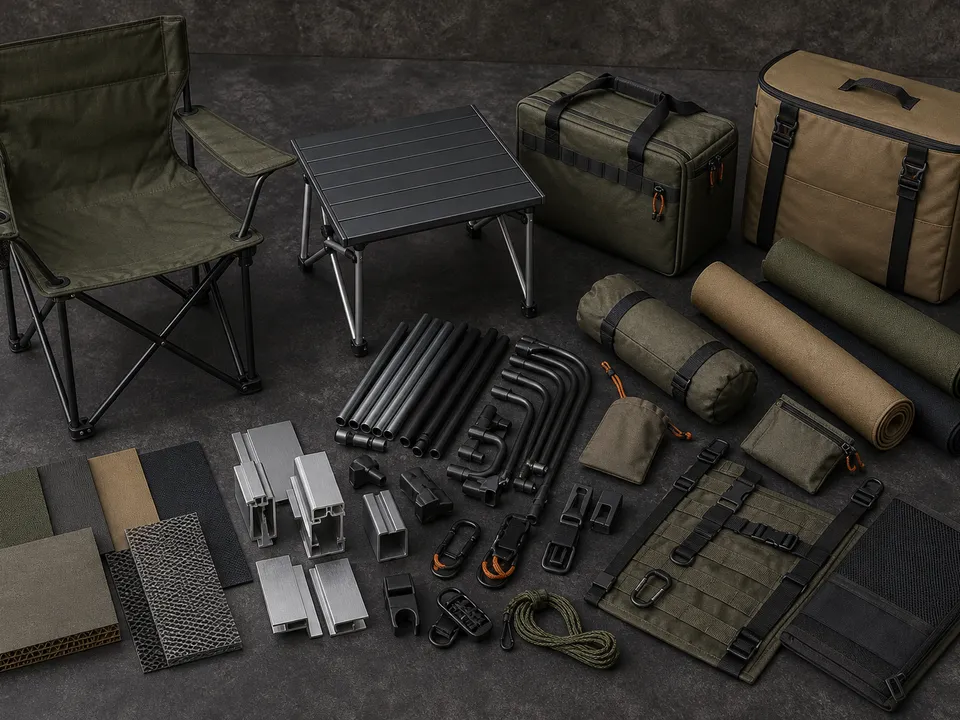
Outdoor gear packaging has four jobs: protect the product, identify it, communicate required information and move efficiently through the supply chain.
A premium-looking box that arrives crushed is not successful. Neither is a protective package that makes fulfillment expensive or leaves the customer unsure how to use the product.
Start with the distribution journey
Map every handling stage:
- Factory packing
- Pallet or floor loading
- Inland transport
- Ocean or air freight
- Customs inspection
- Warehouse handling
- Parcel delivery or retail distribution
- Customer unboxing and possible return
An e-commerce package may experience repeated drops and individual courier handling. A palletized retail order may prioritize stacking and shelf presentation. One packaging specification may not fit both channels.
Choose the primary packaging format
Carry bag or reusable storage bag
Common for tents, chairs, textiles and accessories. It can remain part of the product and support storage after purchase. Specify fabric, seams, closures, handles, warning labels and packed fit.
Printed carton
A retail carton offers a strong surface for brand, product information and barcodes. It may require inserts or internal restraint to stop movement.
Corrugated sleeve or belly band
Useful when the product or carry bag already provides structure and visibility. It uses less board than a full box but offers less protection.
Polybag or protective bag
A simple bag can protect against dust and moisture during handling. Review thickness, suffocation warnings where applicable, recycling marks and destination or retailer restrictions.
Molded or fabricated insert
Paperboard, corrugated, pulp or foam inserts can locate components and protect finished surfaces. Select the material based on impact risk, weight, recovery, presentation and recycling goals.
Design the pack-out before approving artwork
Build and photograph the packing sequence. Confirm:
- Product orientation
- Protection between hard components
- Restraint of loose hardware
- Location of instructions and accessories
- Prevention of abrasion and puncture
- Closure method
- Finished package dimensions and weight
If the customer cannot repack a reusable product, the carry solution may need adjustment.
For multi-part outdoor furniture or RV accessories, include a component checklist so missing pieces can be identified before the carton is closed.
Treat packed dimensions as a product requirement
Carton volume influences container utilization, warehouse space, parcel charges and damage risk. Ask the supplier for the external dimensions and gross weight of the retail pack and master carton.
Compare proposed pack counts using actual carton dimensions. Avoid cartons that become too heavy for safe manual handling or too weak for the stacking pattern.
A packaging redesign can sometimes improve landed cost more safely than reducing product materials. See our manufacturing cost guide for the wider cost model.
Build the information hierarchy
Packaging content may include:
- Brand and product name
- Model, size, color and quantity
- Key features supported by evidence
- Setup or use summary
- Warnings
- Material or fiber information
- Country of origin
- Manufacturer, importer or responsible operator details as required
- Traceability code
- Barcode
- Recycling and disposal information
- Website and support contact
The exact requirements depend on the product and destination. Use the US and EU compliance framework as a starting point and obtain product-specific advice.
Do not let marketing artwork cover required information or make unsupported performance claims.
Control artwork and versioning
Keep one approved artwork package with:
- Dieline revision
- Print-ready files
- Fonts and linked images
- Color references
- Barcode numbers
- Required copy by language
- Approval date
- SKU mapping
Use a proof for layout and a production sample for color, substrate and finishing. A screen preview cannot fully represent ink on kraft board, coated stock or fabric.
Market-specific labels can be more flexible than printing every language on every box, but the attachment and control method still needs approval.
Plan master cartons and shipping marks
The master carton protects retail units and supports warehouse identification. Define board construction based on product weight, stacking, humidity and journey rather than using a generic carton description.
Shipping marks commonly identify purchase order, SKU, quantity, carton number, dimensions, gross and net weight, destination and handling instructions. Align them with the customer's warehouse guide.
Ensure barcodes remain scannable and are not placed across seams or highly curved surfaces.
Validate packaging performance
Testing should reflect the distribution environment. The International Safe Transit Association publishes packaged-product test procedures covering different levels of transport simulation.
A plan may include conditioning, drop, vibration, compression or other stresses. The suitable method depends on package size, weight, shipping mode and customer requirements.
After testing, inspect both the package and product. Passing appearance alone is not enough if hardware has shifted or a coating has been abraded.
Improve sustainability with measurable choices
Avoid vague “eco packaging” claims. Define changes such as:
- Eliminate an unnecessary inner bag
- Replace a mixed-material insert with recyclable paper-based protection
- Reduce empty volume
- Use a verified recycled-content board
- Design a reusable carry bag with a real post-purchase purpose
- Print disposal instructions appropriate to the market
Protection remains essential. Product damage and replacement shipments also create waste.
Packaging approval checklist
Before mass production, confirm:
- Product and accessories fit without damaging pressure
- Pack-out sequence is documented
- Retail and master carton dimensions are verified
- Artwork and barcode match the correct SKU
- Required labels, warnings and instructions are approved
- Shipping marks match the purchase order
- Protection is suitable for the sales channel
- Transit testing is completed when required
- A production packaging sample is retained
- Final inspection includes pack-out checks
For packaging-sensitive RV and van-life products or a wider private label range, share your channel, SKU count and packing requirements during the first quotation round.